
Over the past week, we’ve been experiencing more day-to-day volatility, with sharper swings and a noticeable shift in market leadership. While market volatility is never comfortable, periods like this can feel especially unsettling after the strong run led by a relatively small group of large technology companies over the past few years.
That said, this type of environment is very much in line with what markets have experienced historically. Short-term pullbacks, rotations, and leadership changes are a normal and healthy part of how markets have functioned over time.
We believe times like these highlight how important it is to look beyond the headlines and dig into the underlying context, as the day-to-day noise doesn’t always reflect what’s happening beneath the surface.
The “Layoff Headline” vs. The Context
- The headline is noisier than the data: While the press is highlighting “the most January layoffs since 2009,” this is largely driven by two specific situations, not broad economic weakness.
- It’s concentrated, not systemic: Approximately 40% of these announced cuts came from just two companies—Amazon and UPS.
- Amazon is cutting middle management layers after years of over-hiring.
- UPS is restructuring to move away from low-margin/ high-volume shipping (specifically Amazon returns) to focus on more profitable small business revenue.1
The Labor Market Remains Stable
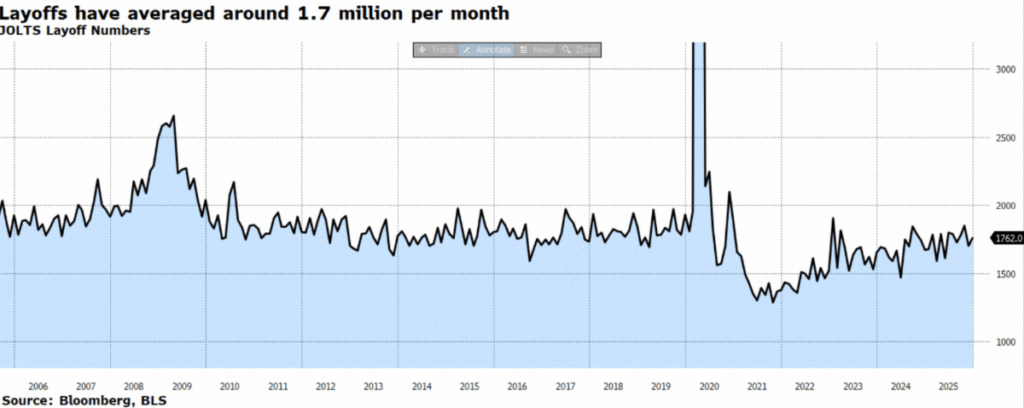
- Historical perspective matters: Despite the scary headlines, actual firing activity remains low. JOLTS data shows we are averaging ~1.7 million layoffs monthly, which is actually lower than the healthy averages seen between 2010–2019. (see chart below)
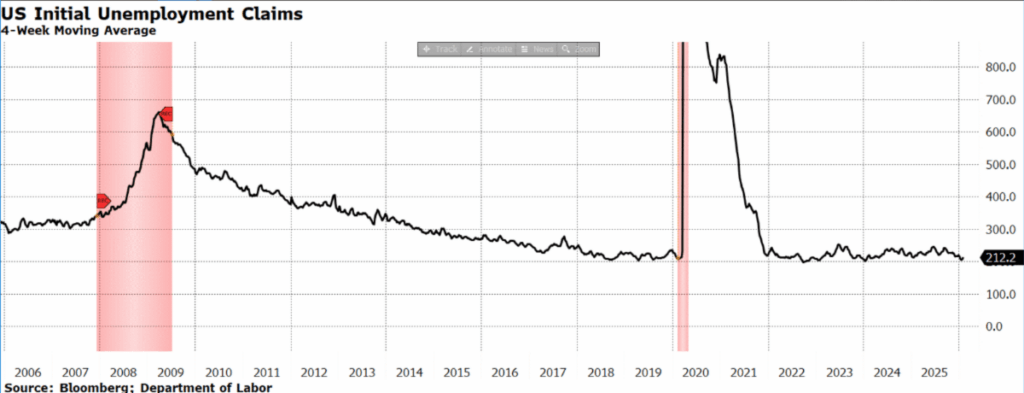
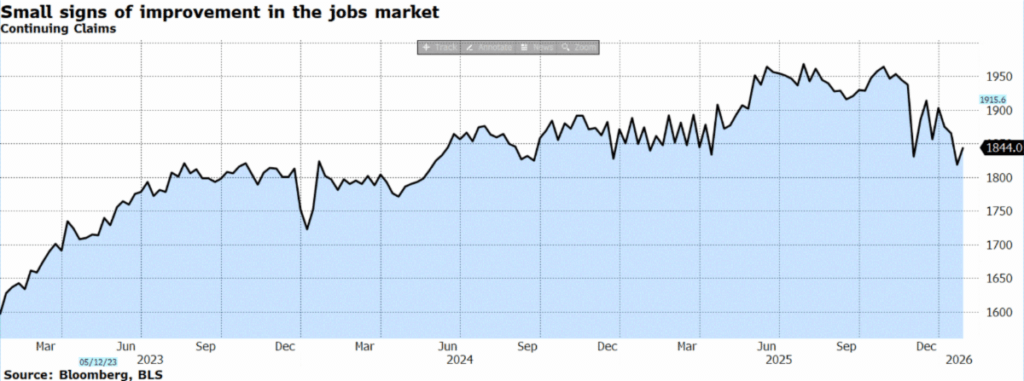
- Claims are steady: We aren’t seeing these announcements translate into a spike in actual jobless claims. Initial and continuing claims remain stable, suggesting people who are let go are finding new roles relatively quickly. (see charts below)
Market Signal: A “Violent” Rotation Under the Surface
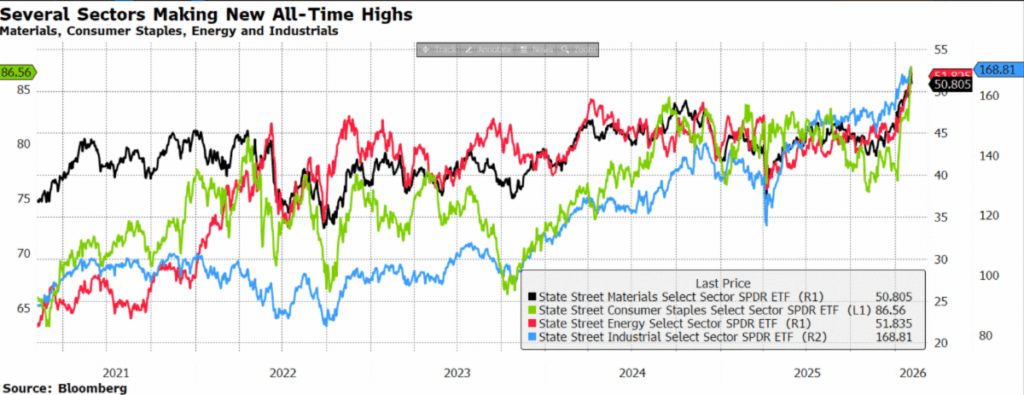
- Tech is weak, but the “Real Economy” is booming: We are witnessing a massive rotation. While US Tech stocks have drifted down to multi-month lows, capital is aggressively rotating into cyclical and defensive areas.
- Broad leadership: Earlier this week on Wednesday, while tech struggled, we saw Industrials, Energy, Materials, and Consumer Staples all make new all-time highs. This confirms the rally is widening out beyond the “Mag 7.” (see chart below)
- Breadth is improving: The S&P 500 Equal-Weight Index (which removes the skew of giant tech companies) just hit a new all-time high, signaling that the average stock is actually performing exceptionally well.
Focusing on the Bigger Picture
Stepping back and focusing on the bigger picture, one encouraging sign is that diversification is working in real time. While large-cap tech stocks have faced pressure, other areas — including the rest of the S&P 500, small- and mid-cap stocks, international markets, and bonds — have held up relatively well.
In our view, while this rotation can feel uncomfortable, the broadening of leadership is a positive indicator for long-term market health. Periods like this reinforce why we emphasize diversification, disciplined risk management, and staying focused on long-term strategy rather than short-term headlines.
This is also why our financial plans are built around long-term goals, not short-term market moves. Our planning already accounts for more difficult environments, including recessions and bear markets, so recent volatility remains within the range we expect.
For more on the benefits of staying invested, read this recent blog by one of our Senior Wealth Advisors:
Blog: When Headlines Get Loud, Look Deeper
We continue to monitor conditions closely, but our core philosophies remain the same: stay focused on your goals, stay diversified, and let your plan do its job through both strong and volatile markets.
As always, if you have questions or want to talk through how current events relate to your situation, we’re here for you.
Your Meridian SWG Advisory Team
1 – Source: CHALLENGER, GRAY & CHRISTMAS, INC as of 2/5/2026